|
|
|
Biopharma can't comply with tariffs without guidance. Plus, BIO's message on AMR. (779 words, 3 minutes, 7 seconds) |
|
|
|
With pharmaceutical tariffs looming, guidance on compliance is lacking |
|
|
With patented pharmaceutical tariffs set to launch in two weeks, BIO and the industry are still urgently seeking the guidance necessary for compliance.
Why it matters: Companies aren’t sure what, if any, tariffs they’ll owe, or how to comply. The resulting business uncertainty disrupts planning and intimidates investors. Meanwhile, patients can't gauge the impact on the cost and availability of drugs they need.
What we know: A tariff of 100% on patented pharmaceuticals and their inputs is set to take effect Sept. 29. Tariffs can be lower for imports from certain countries, for certain products, and for companies negotiating Most Favored Nation (MFN) pricing agreements or onshoring agreements.
What we don’t know: - Exemptions are supposed to apply for various products, but with insufficient guidelines, companies cannot tell if they’re eligible.
- Case-by-case decisions on exemptions are expected, but we don’t know the details of that process, which will probably be time-consuming.
- What happens on Sept. 29 if there is insufficient information to fully implement the tariffs?
BIO is seeking answers, keeping in close contact with the Department of Commerce and informing its members about any developments.
BIO recommends tariff alternatives, including strategic incentives, like tax credits for building domestic manufacturing, and investments in U.S. biotech research and workforce development. Appropriately targeted, non-tariff measures could secure supply chains while freeing biotechs to invest.
Read more on Bio.News.
|
|
|
|
BIO urges policy to support antimicrobial innovation at PACCARB meeting |
|
|
BIO urged policy to incentivize new antimicrobial innovations that can prevent and treat infections and address drug-resistance at a meeting on antimicrobial resistance (AMR) organized by the Health and Human Services (HHS) Department.
The event, a public meeting of the Presidential Advisory Council on Combating Antibiotic-Resistant Bacteria (PACCARB) looked at the potential of microbiome science to fight AMR and drive anti-infective innovation.
The challenge: While innovative new antimicrobials can help combat AMR, “the promise of these products cannot be separated from the economic realities facing antimicrobial innovation,” Amelia Gerste, BIO Senior Manager of Infectious Diseases Policy, told the meeting. “The challenge is not primarily scientific—but a market challenge.”
The solution: “BIO urges policymakers to advance antimicrobial pull incentives that improve these market dynamics, support appropriate use, and delink revenue from sales volume,” Gerste said. “A contracting model—like in the bipartisan PASTEUR Act—would reward societal value of these products, support stewardship, and provide developers with the predictable return needed to sustain innovation.”
Read more about the PASTEUR Act.
|
|
|
|
|
|
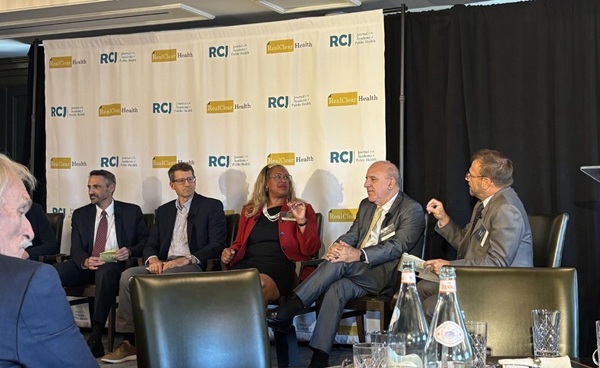
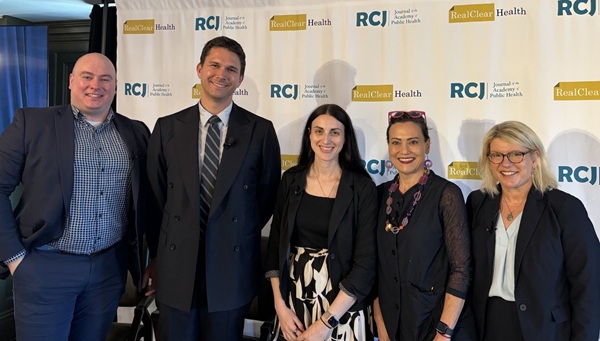
BIO’s top experts informed panels at the inaugural Future of Public Health conference, organized by RealClearHealth and the Academy of Public Health. Above, Phyllis Arthur, BIO's EVP and Chief of Global Health (center), joins a panel on the future of U.S. vaccine policy alongside pediatric infectious disease clinicians, government officials, and members of the Advisory Committee on Immunization Policy (ACIP). They assessed how U.S. vaccination practice compares with peer nations. Below, Michele Oshman, BIO's Chief Patient Advocate and SVP of Alliance Development (second right), joins a panel on prior authorization, examining how the utilization-management process affects patients' access to care their doctors have already prescribed. Read more here. |
|
|
|
New leadership selections announced at the Food and Drug Administration (FDA). Jared Seehafer was selected to serve as FDA’s first Deputy Commissioner for Technology and Artificial Intelligence. Michael Davis, MD, was selected to serve as Director of the Center for Drug Evaluation and Research (CDER), after serving as the center’s Acting Director and previously as its Deputy Center Director. Karim Mikhail, was selected as the Director of Center for Biologics Evaluation and Research (CBER) after serving as the center’s Acting Director. Bret Koplow, was selected to serve as the Director of the Center for Tobacco Products (CTP) after serving as the center’s Acting Director. Read more here. |
|
|
|
|
Both the House and Senate will be in session this week, and health care and biotech are on the agenda:
|
|
|
|
|
|