Biotechnology innovation is helping to heal, fuel, and feed the world. These webinars represent BIO spotlighting some recent scientific developments.

As monoclonal antibody (mAb) programs approach IND, delays often stem from fragmented development, tech transfer complexity, and limited process efficiency.
In this webinar, Thermo Fisher Scientific presents a reengineered Path to IND for biologics platform that combines advanced platform science with integrated U.S.-based manufacturing to accelerate timelines and reduce risk.
Join our Head of Technical and Scientific Affairs to explore:
- Expanded mAb manufacturing capacity: Future drug substance and product capacity in Plainville, MA to ease constraints and increase availability at sites like Groningen (NL) and Lengnau (CH).
- Advanced CHO-K1 platform with AI/ML: High-performing CHO-K1 cell line and process intensification achieving up to 11 g/L,* and enhanced by AI/ML-driven vector design and clone optimization to boost expression, stability, and speed.
- Accelerated path to IND: End-to-end biologics platform delivering IND-ready material in as little as 8 months with titer levels of up to 8 g/L.*
- Integrated process characterization and validation: Risk-based approach to PC, PV, and tech transfer to strengthen process robustness and help to accelerate PPQ readiness.
- Risk-mitigated development approach: Combines QbD, stage-gate governance, and qualified scale-down models to help to reduce variability and enable more predictable scale-up.
- Flexible scale model: Single-use bioreactor strategy (500–5,000 L) across a global network to streamline tech transfer from development through commercial manufacturing.
Discover how integrating advanced cell line engineering, high-efficiency processes, and a unified U.S. manufacturing strategy can help bring your mAb therapy to IND faster—with greater control and confidence.

Elevate your research with Google Cloud AI solutions for Healthcare and Life Sciences, designed to help your organization supercharge scientific breakthroughs. Join our upcoming webinar to discover how AI is helping to transform the laboratory landscape by automating the most time-consuming parts of the research cycle.
From rapid hypothesis generation and intelligent experimental design to complex multi-modal data analysis, Google Cloud solutions like Co-Scientist, Alpha Genome, and Alpha Evolve can act as a force multiplier for your team. Learn how to:
- Accelerate Discovery: Shorten the path from inquiry to impact with automated literature synthesis and real-time reasoning.
- Optimize Workflows: Streamline lab operations and simulate experimental outcomes before picking up a pipette.
- Unlock Innovation: Uncover hidden patterns in your data that traditional methods often miss.
Whether you’re in drug discovery, materials science, or academic research, this webinar will show you how to merge human expertise with AI precision to stay at the forefront of innovation. Don’t miss the chance to see the future of science in action.

Join Thermo Fisher Scientific for an exclusive webinar introducing a transformative approach to biologics development and clinical scale-up. Their "Path to IND for Biologics" method accelerates the journey from DNA to IND/IMPD submission and first-in-human clinical trials in as few as 9 months. Dr. Elena Gontarz, a leading expert in the biologics industry, will guide you through this innovative process, leveraging AI/ML, transposase technology, and integrated solutions during the session: "Path to IND for Biologics: From DNA to First-in-Human in 9 Months." Following the presentation, Dr. Gontarz will answer audience questions and discuss how these novel strategies can streamline the development of complex biologics, such as Fc-fusion proteins and bispecific antibodies, driving them swiftly from development to commercialization.
Get a sneak peek on this novel platform
Terms and Conditions: Titer levels provided are estimates based on third party results and may vary depending on molecule type or other factors. Timeline from DNA to drug product and start of clinical trials for all path to IND for biologics options may vary depending on molecule type or other factors and are estimates to be finalized after third party cell line development dates are available and confirmed. 9-month timeline will incur additional risk.
Learn more about Dr. Elena Gontarz's expertise and background:

Is this the first time you’re attending BIO International Convention? This webinar is for you! We’ll cover all the basics of where to go and what to do - plus, you’ll get some insider tips from the BIO team on this year’s exciting event.
If you haven't already registered, please learn more and register at convention.bio.org
More than $4B of deals between biopharma companies and AI specialists were announced last year. Similar to the massive quality leap from GPT-2 to GPT-4 and the record-breaking consumer adoption rates of AI tools, that same exponential progress and uptake is coming to biotech AI. 2024 may bring the first one-trillion-parameter protein language model. Companies are already using AI to program, as opposed to discover, antibodies. This level of opportunity and change brings with it urgency—— companies need to rethink from the ground up how their R&D should work to compete in a new era defined by the intersection of biology, data, and AI.
In this webinar, learn how companies are updating their approach to R&D, with a focus on:
- AI-Ready Data: Improving generation of high-quality biomedical data to support AI model building and model tuning
- AI-Enabled Scientists: Integrating the right models directly into scientists’ workflows for everyday use
- Scalability: Making performance, speed, privacy, and cost tradeoffs for deployment of AI, and connecting the wet and dry labs

View this conversation highlighting how BIO member companies are strengthening food security and addressing climate change through biotechnology innovations in crop protection and efficient food production. Learn how regulation and policy can support agricultural innovation to protect our environment and our food supply.

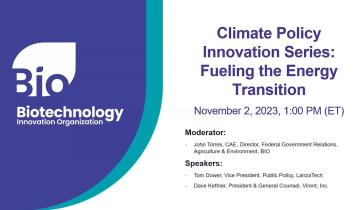
View this conversation highlighting how BIO member companies are leveraging biotechnology innovations to enable advances in climate adaptation, mitigation, and resilience. Hear how diverse feedstocks and manufacturing processes are targeting emission reduction breakthroughs in hard-to-reach sectors. Learn how regulation and policy can better incentivize innovation and be structured to support new and emerging technologies throughout research, development, demonstration, and deployment.

The Cell and Gene Therapy (CGT) Science Series is a quarterly seminar series focused on scientific topics related to cell and gene therapy products. The CGT Science Series is intended to foster scientific exchange between the Biotechnology Innovation Organization (BIO), the American Society of Cell & Gene Therapy (ASGCT), and Center for Biologics Evaluation and Research (CBER) review staff on a variety of topics that span the CGT product lifecycle. The seminars are planned as 60-minute virtual webinars featuring a speaker from one of the three organizations. The CGT Science Series will enable a deep dive into a specific technical and/or scientific area. Topics in the series may include but are not limited to, nonclinical, CMC, clinical, or post-market phases of development related to CGT product lifecycle.
Moderator:
– Anne-Virginie Eggimann, Tessera
Opening Remarks:
– Cartier Esham, Senior Advisor, Biotechnology Innovation Organization (BIO)
Speaker:
– Jing Liao, Director, Vector Development and Operations, Alexion Pharmaceuticals

Cell + Gene Therapy Science Series
An ASGCT collaboration with BIO and FDA
The Cell and Gene Therapy (CGT) Science Series is a quarterly seminar series focused on scientific topics related to cell and gene therapy products. The CGT Science Series is intended to foster scientific exchange between the Biotechnology Innovation Organization (BIO), American Society of Gene & Cell Therapy (ASGCT), and FDA's Center for Biologics Evaluation and Research (CBER) review staff on a variety of topics that span the CGT product lifecycle. The seminars are planned as 60-minute virtual webinars featuring a speaker from one of the three organizations. The CGT Science Series will enable a deep dive into a specific technical and/or scientific area. Topics in the series may include, but are not limited to, nonclinical, CMC, clinical, or post-market phases of development related to CGT product lifecycle.
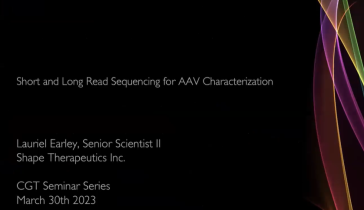
Short and Long Read Sequencing for AAV Characterization
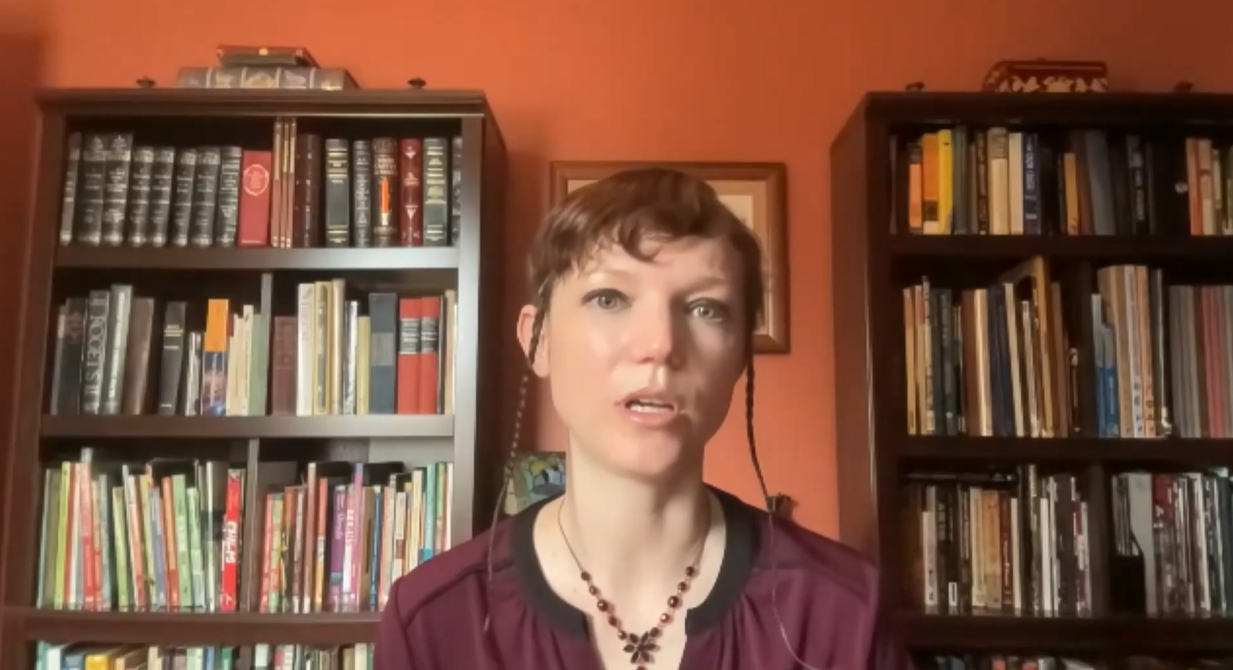
The inaugural CGT Science Series seminar focused on NGS characterization of AAV and was presented by Dr. Lauriel Earley.
Dr. Earley is a Senior Scientist with Shape Therapeutics who has been studying the basic biology of adeno-associated virus for over decade. During her graduate studies at Oregon Health & Science University, she examined the role of assembly-activating protein under the mentorship of Dr. Hiroyuki Nakai. After receiving her PhD, she joined Dr. Jude Samulski's laboratory at the University of North Carolina, Chapel Hill and took on a project to characterize the intrinsic promoter ability of the inverted terminal repeat sequences from various AAV serotypes. Dr. Earley joined Shape Therapeutics in 2019 and is currently leading their vector platform development team. In addition, Dr. Earley has been an active member of ASGCT since 2012 and is currently serving on the Patient Outreach Committee.