
Simplify the System

It’s Time to Simplify the System
 

Americans want healthcare reforms that directly lower out-of-pocket costs while protecting the U.S. biotech industry and the numerous cutting-edge medicines, millions of jobs, and trillions in economic activity it supports.

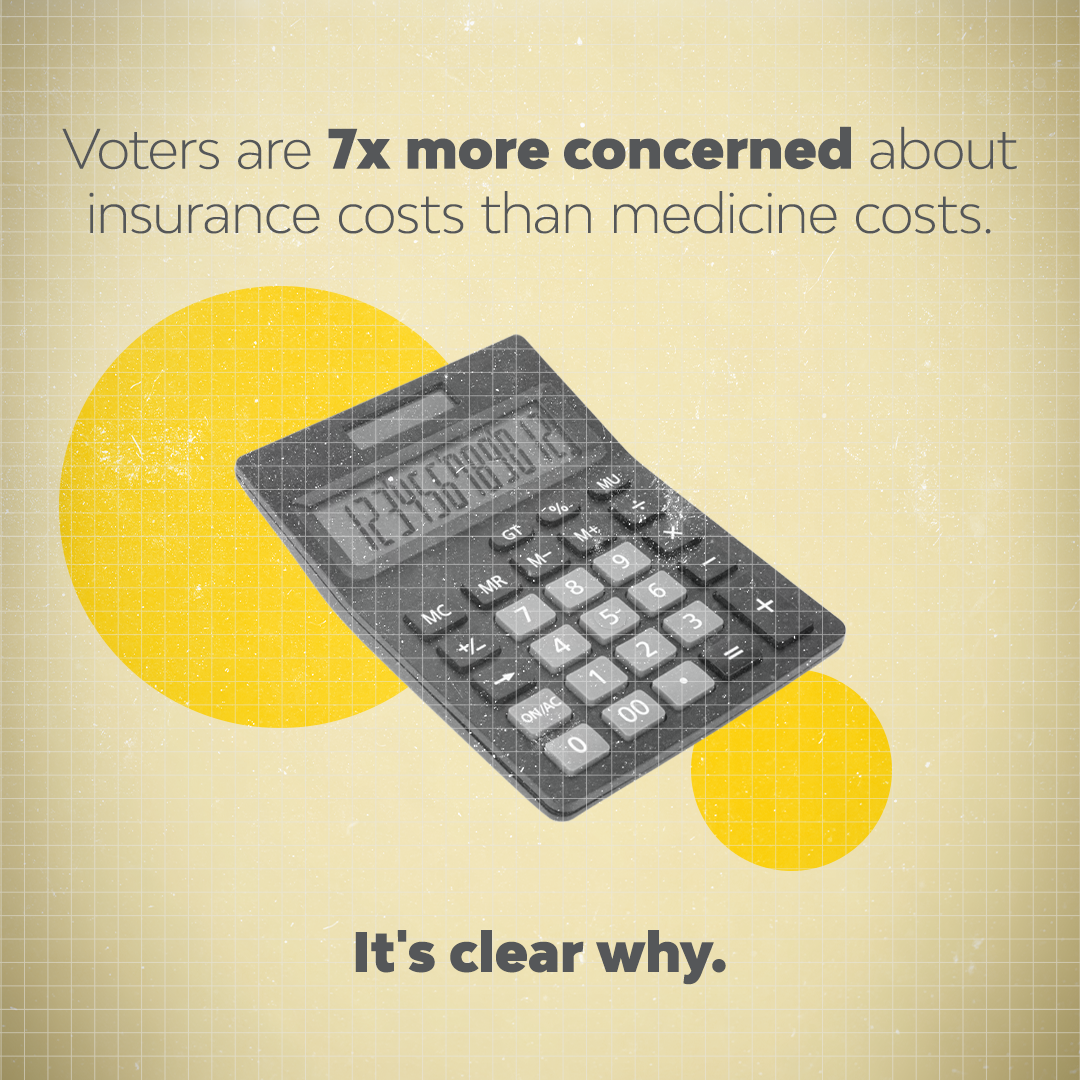
Policymakers should focus on affordability by untangling a healthcare system overloaded with insurers, PBMs, and hospital markups that distort costs paid by consumers. 

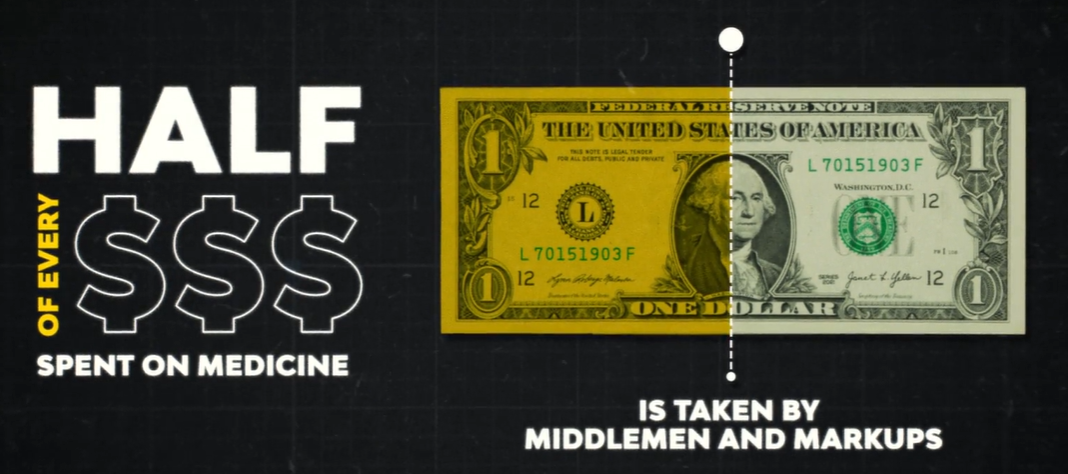
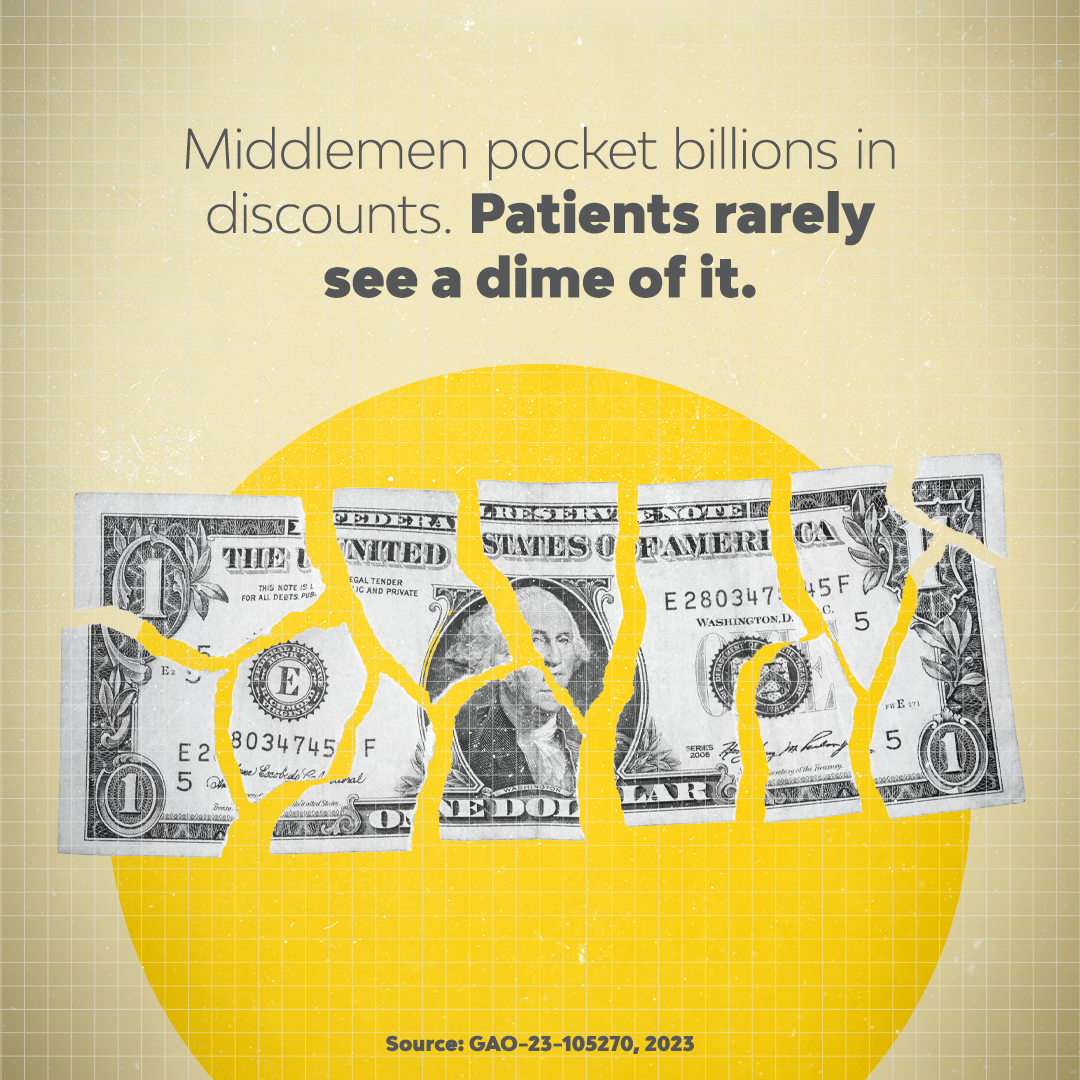
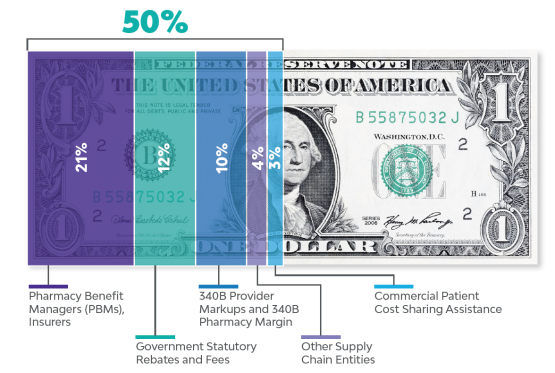
  • The U.S. is the only country in the world where 50% of every dollar spent on medicine goes to middlemen, most notably Pharmacy Benefit Managers (PBMs). PBMs generally pocket these savings rather than pass them on to patients at the pharmacy counter.

  • In the U.S., patients pay more out of pocket for medicines than for hospital costs, even though spending at the hospital is three times higher, because of the way that insurance companies engineer the benefit designs.

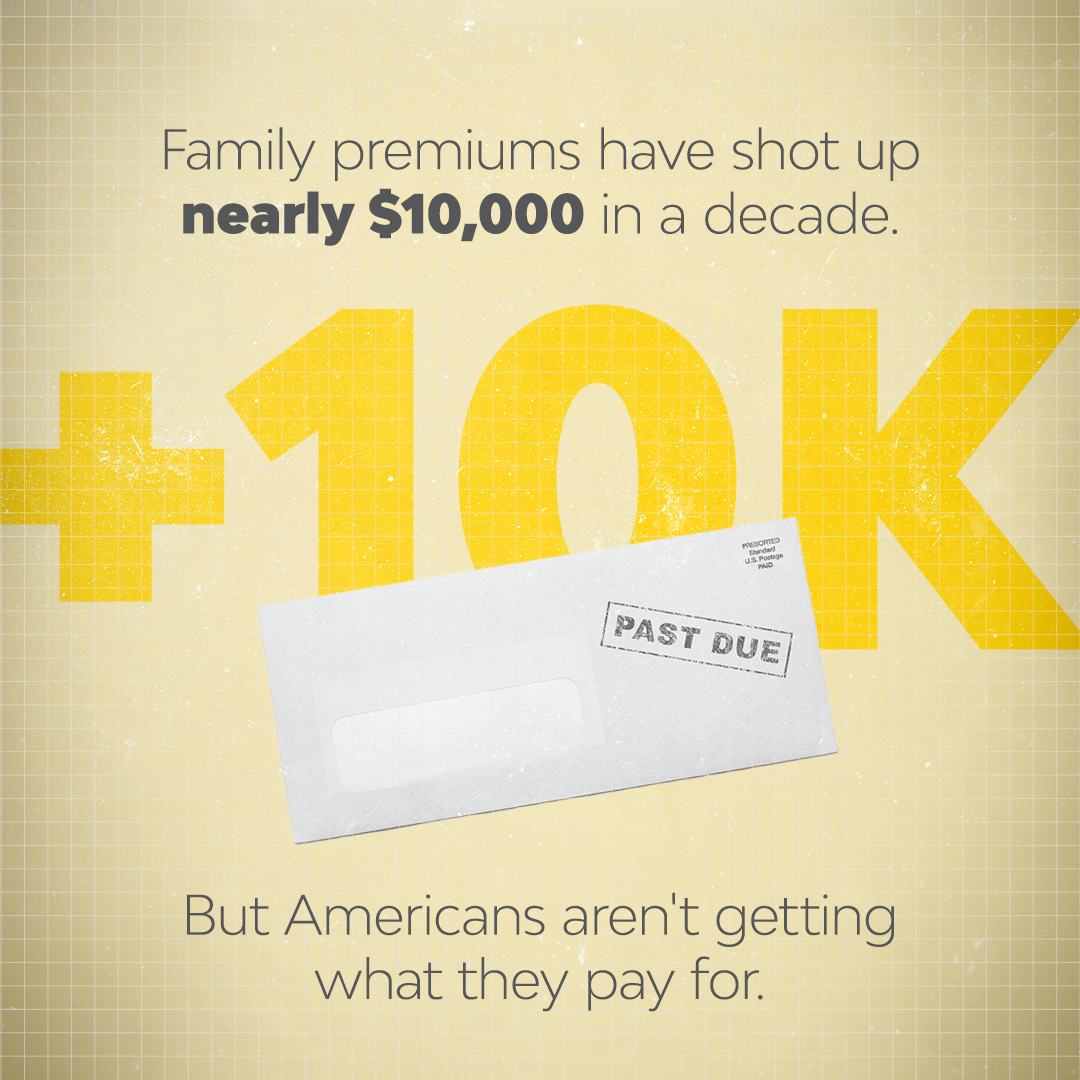
  • Hospitals regularly mark up the price of medicines, especially cancer drugs, to boost profits. In some cases, hospitals will charge a price that is six or seven times higher than the price they paid for the medicine. These markups occur despite many nonprofit providers receiving medicines at substantial discounts under the 340B program, which diverts more than $60 billion into hospital coffers and shortchanges employers by over $6 billion annually, resulting in higher premiums for patients. 

Simplify the System
  • Continue to reform PBM practices. Strong PBM reform can begin to break the link between PBM fees and drug prices.

  • Infuse the 340B drug discount program with greater transparency and accountability. Over the years, the 340B program has expanded well past the original intent of Congress. The explosive growth of the program is creating ripple effects that are raising the cost of health care for others and not serving the needs of the most vulnerable patients.

  • Provide employers full access to data about health plan drug pricing. Due to the design of health insurer plans, employers often don't have full access to data about health plan drug pricing. This drives up employer premiums while insurance companies receive significant rebates.

  • Pass laws that ensure patient assistance is not diverted away from patients and into the pockets of middlemen. 

  • Leverage trade agreements to negotiate increased payments for medicines outside of the US. 

Simplify the System
Simplify the System
Simplify the System
International Price Setting

Patients Pay. Middlemen Take. Innovation Loses.
 

Dig deeper into the data to see how billions of dollars are flowing to many entities that add no real value to patient care. 
International Price Setting

How To Empower Patients Through Smarter, Simpler Reforms
 

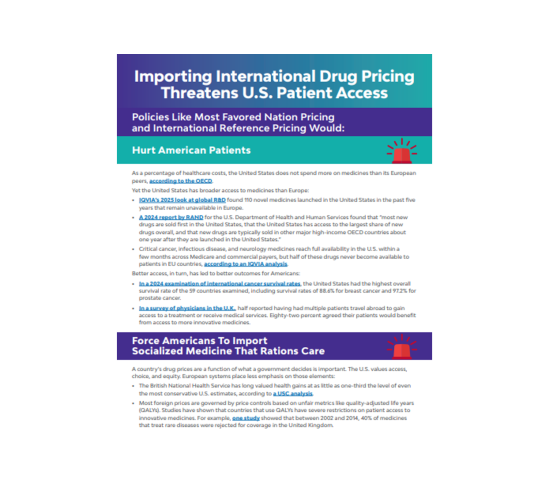
International price setting threatens patient access and undermines American leadership in biotechnology.

Read More: Putting Americans First Series 

mfn

Putting Americans First: Importing European prices means importing European systems and values

European countries don’t just pull prices for medicines out of thin air. The prices that those governments set are based on specific sets of assumptions about their citizens and their economies. 

Putting Americans First 2

Putting Americans First: No medicine is more expensive than the one patients can’t access

The most notable differences between the pharmaceutical market in the U.S. and those in other countries are not in the prices. They’re in the ability of the citizens to access breakthrough innovation.

Putting Americans First 1

Putting Americans First: International prices in context

It is often taken as a given that drug prices in the U.S. are higher than those in other nations. And while there is a difference in price, that difference is often exaggerated and taken out of context.