February 26, 2026
Speakers: Michael G. King, Ron Baker , Federica Frati, PhD, Gabi Hanna, MD, Michael Stocum
Get the inside track on oncology investment and partnering trends following JPM Week. Our panelists will highlight the most important oncology updates coming out of San Francisco and share what to expect heading into BIO Partnering for Oncology (May 29–June 2, 2026, in Chicago),…

March 17, 2026
Speakers: Jose Arellano, Clark Chandler, Brandon Clough, Greg Hassan, Steve Joseph, Gaby Levey
BIO Savings Week connects life science companies with the lab and business solutions available through their BIO or state life science association membership. Across three days, you will hear directly from BIO Business Solutions' preferred providers about programs tailored to…

March 18, 2026
Speakers: Matt Curry, Sarah Glazier, Alina Mencias, Dave Tucker
BIO Savings Week connects life science companies with the lab and business solutions available through their BIO or state life science association membership. Across three days, you will hear directly from BIO Business Solutions' preferred providers about programs tailored to…


Every year, JPM Healthcare Week sets the pace for biotech deal-making. But the skills and insights you gain from preparing for high stakes partnering meetings are valuable long after January. In this webinar, a panel of investors and biotech executives will share what makes a pitch stand out, common pitfalls to avoid and practical guidance you can use not just at JPM Week, but at events like the BIO Investment & Growth Summit (March 2-3, Miami Beach) and other partnering opportunities throughout the year. Learn how to register for BIO events at this link.
This webinar features:
- Strategies and tips for making the most of your time during JPM Week
- Methods for improving your partnering meetings
- How to access the BIO and Novateur Ventures JPM Week Events Guide mobile app
- What to expect at the 2026 BIO Investment and Growth Summit
- Live Q&A with the speakers

In September 2025, the U.S. FDA launched a major enforcement campaign targeting direct-to-consumer (DTC) pharmaceutical advertising that misleads patients or downplays risks. Following a September 2025 presidential directive, the agency announced hundreds of enforcement actions—including over 100 cease-and-desist letters—signaling a zero-tolerance stance toward unbalanced or deceptive ads. While most of the letters focused on DTC content, FDA also sent letters for health care provider (HCP) promotion. The message: Government scrutiny and enforcement will significantly increase for biopharma as well as medical device promotion. This webinar includes regulatory compliance and drug advertising compliance experts who dissect the FDA’s mindset and ways to proactively mitigate concerns.
In this webinar, panelists:
– Drill down into FDA’s renewed enforcement areas
– Dissect the implications of increased enforcement on the industry
– Identify specific cases that are clear examples for company concern
– Isolate the key principles for avoiding violations and demonstrating good faith

Wrap up the week with an executive overview of BIO Business Solutions and a deep dive with our flagship partner, Avantor. Learn how the program delivers ongoing value and discover exclusive offers and procurement strategies available to BIO members.
Agenda Overview:
- BIO Business Solutions Overview by BIO Vice President of Business Development, Jeff Vallerga
- Avantor – Learn how to drive purchasing efficiency and lab performance with one of the life science industry's leading suppliers. From everyday consumables to capital equipment, discover how member companies leverage Avantor’s flagship program for exclusive pricing, custom sourcing support, and supply chain optimization.
- Q&A
- Closing Remarks & Next Steps
BIO Business Solutions® is the largest cost-savings program for the life sciences industry, leveraging the collective buying power of thousands of member companies to deliver exclusive pricing on lab supplies, insurance, office essentials, and more, all at no additional cost to members.

Join Thermo Fisher Scientific for an exclusive webinar introducing a transformative approach to biologics development and clinical scale-up. Their "Path to IND for Biologics" method accelerates the journey from DNA to IND/IMPD submission and first-in-human clinical trials in as few as 9 months. Dr. Elena Gontarz, a leading expert in the biologics industry, will guide you through this innovative process, leveraging AI/ML, transposase technology, and integrated solutions during the session: "Path to IND for Biologics: From DNA to First-in-Human in 9 Months." Following the presentation, Dr. Gontarz will answer audience questions and discuss how these novel strategies can streamline the development of complex biologics, such as Fc-fusion proteins and bispecific antibodies, driving them swiftly from development to commercialization.
Get a sneak peek on this novel platform
Terms and Conditions: Titer levels provided are estimates based on third party results and may vary depending on molecule type or other factors. Timeline from DNA to drug product and start of clinical trials for all path to IND for biologics options may vary depending on molecule type or other factors and are estimates to be finalized after third party cell line development dates are available and confirmed. 9-month timeline will incur additional risk.
Learn more about Dr. Elena Gontarz's expertise and background:

View this webinar for an in-depth exploration of today's complex global market landscape. This panel will address the challenges of launching new therapies in multiple countries, focusing on early decision points for risk mitigation and maximizing supply chain resiliency. Discover how Cencora's global capabilities and flexible solutions can strengthen supply chain resilience amidst evolving challenges.
Moderator: Sandra Anderson, Senior Vice President Commercialization, Cencora
Panelists:
- Glenn Pauly, Chief Commercial Officer, Alzheon
- Graham Goodrich, Chief Commercial Officer, Apnimed
- Leigh Shultz, PhD, Associate Vice President & International Head of Trade Channel Strategy & Enablement, Merck & Co.
- Kevin McDermott, Vice President International Commercialization, Cencora
- Tom Doyle, Head of U.S. Commercial Solutions, Cencora
More than $4B of deals between biopharma companies and AI specialists were announced last year. Similar to the massive quality leap from GPT-2 to GPT-4 and the record-breaking consumer adoption rates of AI tools, that same exponential progress and uptake is coming to biotech AI. 2024 may bring the first one-trillion-parameter protein language model. Companies are already using AI to program, as opposed to discover, antibodies. This level of opportunity and change brings with it urgency—— companies need to rethink from the ground up how their R&D should work to compete in a new era defined by the intersection of biology, data, and AI.
In this webinar, learn how companies are updating their approach to R&D, with a focus on:
- AI-Ready Data: Improving generation of high-quality biomedical data to support AI model building and model tuning
- AI-Enabled Scientists: Integrating the right models directly into scientists’ workflows for everyday use
- Scalability: Making performance, speed, privacy, and cost tradeoffs for deployment of AI, and connecting the wet and dry labs

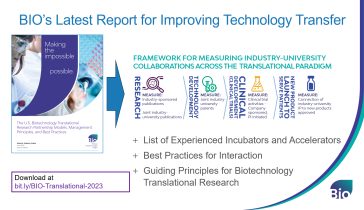
With the majority of biological studies conducted in academic settings but nearly all innovative new drug clinical trials sponsored by industry, improving translational research success rates for commercialization is critical to bringing new treatments to patients. Surveys of academic tech transfer offices and the biopharma industry executives working on such alliances cite as obstacles two highly controllable factors: disagreement about alliance performance metrics and misalignment of deal terms priorities. This panel discusses best practices for removing such obstacles to accelerate more promising ideas into clinical development for patients.
BIO's updated 2023 report, "U.S. Biotechnology Translational Research: Partnership Models, Management Principles, and Best Practices," is available for download at the link below. The webinar also summarizes major findings from that BIO report as context for the panel discussion and audience Q&A.

The Cell and Gene Therapy (CGT) Science Series is a quarterly seminar series focused on scientific topics related to cell and gene therapy products. The CGT Science Series is intended to foster scientific exchange between the Biotechnology Innovation Organization (BIO), the American Society of Cell & Gene Therapy (ASGCT), and Center for Biologics Evaluation and Research (CBER) review staff on a variety of topics that span the CGT product lifecycle. The seminars are planned as 60-minute virtual webinars featuring a speaker from one of the three organizations. The CGT Science Series will enable a deep dive into a specific technical and/or scientific area. Topics in the series may include but are not limited to, nonclinical, CMC, clinical, or post-market phases of development related to CGT product lifecycle.
Moderator:
– Anne-Virginie Eggimann, Tessera
Opening Remarks:
– Cartier Esham, Senior Advisor, Biotechnology Innovation Organization (BIO)
Speaker:
– Jing Liao, Director, Vector Development and Operations, Alexion Pharmaceuticals

U.S. Department of Justice (DOJ) statistics suggest that enforcement will be a top government priority in 2023, including for pharma/life sciences. Warning or untitled letters from the U.S. Food and Drug Administration (FDA) will serve as ammunition for DOJ cases. Statements about product safety will be heavily scrutinized.
Do you know what to watch out for? Has your company trained its employees and marketing agencies on how to appropriately implement the requirements for promotion? What activities require extra vigilance? The prior downturn in enforcement can be linked to the development of a response to COVID-19, which diverted government resources across the board. Now trends suggest the FDA, DOJ, and Office of Inspector General (OIG) will return to active healthcare enforcement in 2023 for violations of the Food Drug and Cosmetic Act (FDCA), False Claims Act and the Anti-Kickback Statute in part attributable to the goal of obtaining additional financial recoveries.
This webinar hosted by the Biotechnology Innovation Organization (BIO) has these learning objectives:
—Understand the current trends for government enforcement
—Dissect the compliance implications of increased enforcement on the industry
—Identify specific cases that are clear examples for company concern
—Isolate the key principles for avoiding violations
ON-DEMAND
COMMUNICATIONS COMPLIANCE COURSES
FOR PROFESSIONAL DEVELOPMENT
Special Discount
Buy 2 course registrations, Get 1 FREE
through May 15, 2023
in honor of this webinar!
The Center for Communication Compliance (CCC) helps biopharmaceutical companies achieve efficient, compliant innovation in a digital world through its proprietary on-demand business solutions in education, technology, and change management.
The CCC eLearning System has set an unmatched standard for confirming regulatory competency through engaging mastery tests and expert education content across more than a dozen course options.
SEE COURSES LIST

Cell + Gene Therapy Science Series
An ASGCT collaboration with BIO and FDA
The Cell and Gene Therapy (CGT) Science Series is a quarterly seminar series focused on scientific topics related to cell and gene therapy products. The CGT Science Series is intended to foster scientific exchange between the Biotechnology Innovation Organization (BIO), American Society of Gene & Cell Therapy (ASGCT), and FDA's Center for Biologics Evaluation and Research (CBER) review staff on a variety of topics that span the CGT product lifecycle. The seminars are planned as 60-minute virtual webinars featuring a speaker from one of the three organizations. The CGT Science Series will enable a deep dive into a specific technical and/or scientific area. Topics in the series may include, but are not limited to, nonclinical, CMC, clinical, or post-market phases of development related to CGT product lifecycle.
Short and Long Read Sequencing for AAV Characterization
The inaugural CGT Science Series seminar focused on NGS characterization of AAV and was presented by Dr. Lauriel Earley.
Dr. Earley is a Senior Scientist with Shape Therapeutics who has been studying the basic biology of adeno-associated virus for over decade. During her graduate studies at Oregon Health & Science University, she examined the role of assembly-activating protein under the mentorship of Dr. Hiroyuki Nakai. After receiving her PhD, she joined Dr. Jude Samulski's laboratory at the University of North Carolina, Chapel Hill and took on a project to characterize the intrinsic promoter ability of the inverted terminal repeat sequences from various AAV serotypes. Dr. Earley joined Shape Therapeutics in 2019 and is currently leading their vector platform development team. In addition, Dr. Earley has been an active member of ASGCT since 2012 and is currently serving on the Patient Outreach Committee.

This is the first meeting in a series of conferences cohosted by the Biotechnology Innovation Organization (BIO) and Solve M.E. that are designed to foster a private-public engagement and create an R&D roadmap for diagnostics and treatments for Long COVID and Post-infection Diseases.
Objective: Convene stakeholders to advance R&D to diagnose and treat Long COVID and post-infection diseases to:
--Increase awareness among drug developers to the unmet need and business opportunity in these indications
--Establish a knowledge base of emerging research in Long COVID and existing body of data in other post-infection diseases (such as dysautonomia, myalgic encephalomyelitis/ chronic fatigue syndrome, mast cell activation, and others).
--Highlight potential biological targets for therapeutic and preventative approaches
--Engage experts and regulators to inform design of clinical studies
--Establish a pre-competitive collaborative network
Recorded on February 21, 2023. Part 1 of 3.

This is the first meeting in a series of conferences cohosted by the Biotechnology Innovation Organization (BIO) and Solve M.E. that are designed to foster a private-public engagement and create an R&D roadmap for diagnostics and treatments for Long COVID and Post-infection Diseases.
Objective: Convene stakeholders to advance R&D to diagnose and treat Long COVID and post-infection diseases to:
--Increase awareness among drug developers to the unmet need and business opportunity in these indications
--Establish a knowledge base of emerging research in Long COVID and existing body of data in other post-infection diseases (such as dysautonomia, myalgic encephalomyelitis/ chronic fatigue syndrome, mast cell activation, and others).
--Highlight potential biological targets for therapeutic and preventative approaches
--Engage experts and regulators to inform design of clinical studies
--Establish a pre-competitive collaborative network
Recorded on February 21, 2023. Part 2 of 3.

This is the first meeting in a series of conferences cohosted by the Biotechnology Innovation Organization (BIO) and Solve M.E. that are designed to foster a private-public engagement and create an R&D roadmap for diagnostics and treatments for Long COVID and Post-infection Diseases.
Objective: Convene stakeholders to advance R&D to diagnose and treat Long COVID and post-infection diseases to:
--Increase awareness among drug developers to the unmet need and business opportunity in these indications
--Establish a knowledge base of emerging research in Long COVID and existing body of data in other post-infection diseases (such as dysautonomia, myalgic encephalomyelitis/ chronic fatigue syndrome, mast cell activation, and others).
--Highlight potential biological targets for therapeutic and preventative approaches
--Engage experts and regulators to inform design of clinical studies
--Establish a pre-competitive collaborative network
Recorded on February 21, 2023. Part 3 of 3.

As an emerging life sciences company, you are overseeing talented personnel and working on multiple projects all while managing overhead costs and staying up-to-date on the industry. The Biotechnology Innovation Organization (BIO) is here to make all of that a little easier and through your membership you receive access to benefits that will save you time and money, and stay current on all things happening in our industry.
This webinar details how your company can take full advantage of your BIO membership investment via the BIO Business Solutions cost savings program.

In 2021, the United States government launched multiple international initiatives focused on issues at the intersection of climate, agriculture, and sustainable food systems. These initiatives are housed under the U.S. Department of Agriculture (USDA) and involve a cross section of government and non-governmental partners.
As part of the 2021 UN Food Systems Summit, the United States launched a Coalition for Sustainable Productivity Growth for Food Security and Resource Conservation (the SPG Coalition) with a goal to accelerate the transition to more sustainable food systems through productivity growth that optimizes agricultural sustainability across social, economic, and environmental dimensions.
Agriculture Innovation Mission for Climate (AIM for Climate/AIM4C) is an initiative launched at COP 26 and led by the United Arab Emirates and the United States. AIM for Climate is focused on addressing climate change and global hunger by increasing investment in, and other support for, climate-smart agriculture and food systems innovation over five years (2021–2025) and enabling greater public-private and cross-sectoral partnerships.
This webinar hosted by the Biotechnology Innovation Organization (BIO) provides an update on the status of the initiatives including a look ahead to COP 27 and beyond. In addition, USDA staff helping to lead this work discuss ways for private sector partners to engage in, support, and amplify the work of the SPG Coalition and AIM for Climate.

On August 16, 2022, President Biden signed the Inflation Reduction Act of 2022, which includes a number of significant prescription drug-related provisions, including a new drug price negotiation program in Medicare, inflation rebates in Medicare Part B and Part D, and a redesign of the Medicare Part D benefit, with a new patient out-of-pocket cap of $2,000.
Leaders from the Biotechnology Innovation Organization (BIO) as well as experts from the Hogan Lovells Life Sciences & Health Care team provide detailed overviews with Q&A on these newly enacted provisions.
The webinar covers the new drug price negotiation program, inflation rebates in Medicare, the Medicare Part D benefit redesign, and new out-of-pocket cap, as well as other important provisions that will reduce patient cost sharing.
- Introduction and Context [0:00:00–0:03:53]:
John Murphy, Chief Policy Officer, BIO - Inflation Reduction Act Background [0:03:54–0:07:26]:
Crystal Kuntz, VP Health Policy and Research, BIO - Drug Price Negotiation Program [0:07:27–0:44:07]:
Ken Choe, Partner, Hogan Lovells - Medicare Part B and Part D Inflation Rebates [0:44:08–1:18:29]:
Alice Valder Curran, Partner, Hogan Lovells - Medicare Part D Redesign [1:18:30–1:53:05]:
Melissa Bianchi, Partner, Hogan Lovells - Conclusion and Next Steps [1:53:06–1:58:02]:
John Murphy, Chief Policy Officer, BIO Downloadable webinar slides at https://bit.ly/BIO-IRA-slides

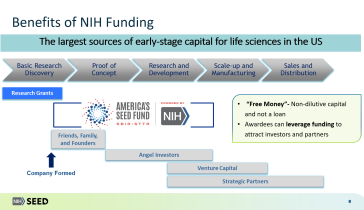
BIO, CSBA, and AdvaMed hosted a special briefing to discuss the success of SBIR/STTR programs, their economic impact, and the important next steps to Federal reauthorization.
The Small Business Innovation Research (SBIR) and Small Business Technology Transfer (STTR) programs are highly competitive award-based programs that encourage domestic small businesses to engage in Federal Research/Research and Development with the potential for commercialization.
Federal funding for the SBIR/STTR Program will expire on September 30, 2022, and we need your support to ensure timely reauthorization! Hear from successful SBIR/STTR grantees and technical experts on these vital programs. After this webinar, you will be able to effectively advocate for Federal SBIR/STTR program reauthorization.